

Why Modern Minds Are Always Tired
Modern life doesn’t exhaust us only through work.
It quietly drains us through the thousands of small decisions we make every single day.
Every decision we make during the day consumes a little mental energy — even the smallest ones.
Have you ever reached the end of the day and wondered why you feel so mentally drained, even though nothing particularly dramatic happened?
Do small decisions sometimes feel strangely difficult — choosing what to eat, what to reply, or what to focus on next?
Have you noticed that the more options you have, the harder it sometimes becomes to choose?
Do you occasionally delay decisions simply because your mind feels too crowded to think clearly?
And do you sometimes feel that modern life demands constant attention, leaving very little room for quiet thought?
It’s Not Just You
A lot of people assume that exhaustion comes mainly from hard work.
• Long hours
• Physical effort
• Heavy responsibilities
All of these certainly contribute to fatigue.
But there is another kind of exhaustion that is much harder to notice.
It doesn’t come from lifting heavy things or solving complex problems.
It comes from something far quieter.
It comes from making decisions — again and again — all day long.
The modern world constantly asks us questions that require mental effort.
Should you check that notification?
Should you reply now or later?
Should you read that article or skip it?
Should you open another tab?
Should you respond to that message immediately or after finishing your task?
Individually, each of these decisions seems harmless.
They are small. Almost trivial.
But together, they form a continuous stream of mental activity that the brain must process from morning until night.
And over time, that stream quietly drains something important — our ability to think clearly.
Psychologists call this phenomenon decision fatigue — the gradual decline in the quality of our decisions after we’ve been forced to make too many choices over time.
In simpler terms, the more decisions we make, the harder it becomes for the mind to keep making good ones.
The Modern Brain Was Never Designed For This Many Choices
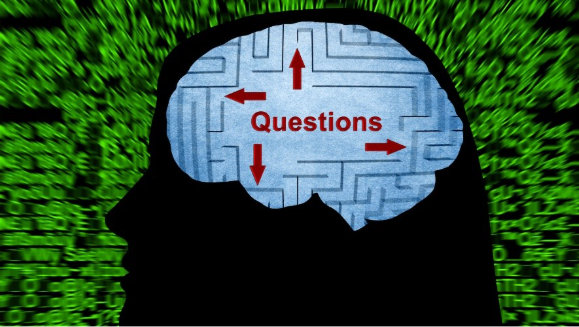
For most of human history, daily life was surprisingly simple when it came to choices.
People lived within routines shaped largely by their environment and circumstances.
Food choices were limited to what was available.
Work was often determined by family roles or community needs.
Even clothing options were minimal compared to today’s endless selections.
Life certainly had its challenges — but an overload of daily decisions was rarely one of them.
Fast forward to the present day, and the situation looks very different.
We live in an environment designed around abundance.
Streaming platforms offer thousands of movies and TV shows — unlike earlier times when choices were limited and often valued more.
Online stores present endless product comparisons.
Restaurants list dozens of menu options.
Social media feeds scroll endlessly with content competing for our attention.
In theory, more options should mean greater freedom.
But in reality, the brain experiences this abundance differently.
Every option requires evaluation, and every choice requires mental processing.
Even when we think we are simply browsing, the brain is quietly working in the background to assess, compare, and decide.
By the time evening arrives, many people have already made hundreds of decisions without even realizing it.
And that quiet accumulation of mental effort slowly drains our cognitive energy.

The modern brain processes more signals in a single day than earlier generations encountered in weeks.
Why Too Many Decisions Quietly Drain the Mind
Every decision, even a small one, requires the brain to perform a series of tasks-
- First, the brain gathers information.
- Then it evaluates possible outcomes.
- Finally, it commits to a choice.
This process may take only seconds, but it still consumes mental resources.
When the number of decisions remains moderate, the brain handles them comfortably.
But when decisions arrive continuously — messages, emails, notifications, tasks, reminders — the mind rarely gets a chance to reset.
By late afternoon, something interesting often happens.
People begin to feel mentally slower.
Choices that seemed easy earlier in the day suddenly feel heavier.
You may find yourself staring at simple options longer than necessary.
Or postponing decisions that would normally take seconds.
This isn’t a sign of laziness.
It’s a sign that the brain has simply used up much of its available decision-making energy.
In fact, researchers have observed that judges, executives, and professionals often make worse decisions later in the day simply because their mental resources have been depleted.
Decision fatigue affects everyone.
Decision fatigue slowly turns into work fatigue, because the brain becomes too tired to focus on meaningful tasks.
It doesn’t matter whether someone is a student, a professional, a parent, or an entrepreneur.
The brain has limits — and modern life pushes against those limits constantly.
Insight Box
Decision fatigue often comes from three modern pressures:
• constant digital interruptions
• too many daily choices
• lack of quiet mental space
When these pressures combine, the mind rarely gets a chance to recover.
Modern life offers endless possibilities — but every possibility asks the brain to decide.
What Happens When the Brain Runs Out of Decision Energy
Decision fatigue rarely appears suddenly.
It builds quietly throughout the day.
In the morning, most people are able to make decisions quickly and confidently.
Choosing what to eat, what to wear, or which task to begin first usually feels easy.
But as the day progresses and more decisions accumulate, something begins to change.
The brain starts conserving energy. Simple choices take longer. Tasks that once felt straightforward begin to feel mentally expensive.
You may find yourself staring at options longer than usual. You may postpone decisions that could normally be made in seconds.
You may even begin avoiding choices altogether.
This is one of the most common effects of decision fatigue.
When the brain becomes mentally tired, it tries to protect itself by reducing effort leading to lowered productivity and heightened stress levels.
Instead of carefully evaluating options, people begin relying on shortcuts.
They choose the easiest option.
They delay the decision. Or they avoid the decision entirely.
This is why people often find themselves scrolling endlessly through streaming platforms without choosing anything.
It is why shopping decisions become exhausting.
And it is why even small tasks sometimes feel strangely difficult late in the day.
The mind is not lazy. It is simply tired from deciding.
When the brain’s decision energy is depleted, clarity disappears.
And when clarity disappears, progress often slows down as well.
Clarity often returns when the mind finally has space to slow down.
Reflection Line
Sometimes the most powerful change we can make in life is simply reducing the number of decisions we allow into our day.
A Simpler Mind Navigates a Complex World
The modern world is unlikely to become quieter anytime soon.
Technology will continue to evolve.
Information will continue to multiply. Opportunities will continue to expand.
But the human mind still operates according to the same biological rhythms it always has.
It needs pauses. It needs moments of reflection.
It needs stretches of uninterrupted thought.
One of the most powerful ways to protect mental clarity is to simplify parts of daily life.
Reduce unnecessary notifications.
Create routines that eliminate repetitive decisions.
Protect small pockets of quiet time during the day.
These changes may seem small, but their effect on the mind can be remarkable.
When the number of daily decisions decreases, something interesting happens.
Mental energy begins to return. Thoughts become clearer.
Choices feel easier.
And slowly, the mind regains something that modern life often takes away — the ability to think calmly and navigate life with intention.
Related Blogs
• Why Modern Life Feels So Overwhelming — And How to Regain Control of Your Mind
• Rebuilding Your Inner Compass in a Noisy World
• The Lost Art of Clear Thinking in a Distracted Age
Victor J Offering
If this blog resonated with you, you may enjoy exploring these creations from Victor J designed to strengthen clarity, calm, and inner balance in a wild busy world moving ahead at a break-neck speed.
🎵 Song
Build It Clean, Build It Green — A reminder that meaningful progress begins with small conscious choices: LINK
🧘 Meditation Track
Golden Hour Gratitude — Evening Meditation to Reflect & Rewire: LINK
📘 Book
Unleashing Your Peak Energy Performance — A guide to building sustainable energy and focus: LINK
🎥 Vlog
Why Modern Life Feels Mentally Exhausting — Understanding the hidden pressures of the digital age: LINK
Explore the Victor J Hub, where ideas, blogs, books, music and tracks, reflections, and practical digital tools come together to help you live with clarity, calm, and strength: LINK
Understanding starts here.
The real work begins in the Hub.